The 3 Resume Issues Costing You Interviews (and How to Fix Them)
Most resumes lose interviews for the same three reasons: ATS formatting problems, missing job-posting keywords, and weak experience matching. Learn how to fix each one with a Master Resume workflow.
Tailor your resume before you apply.
Upload your Master Resume, paste a job posting, and review a role-specific resume in minutes.
Start tailoring for free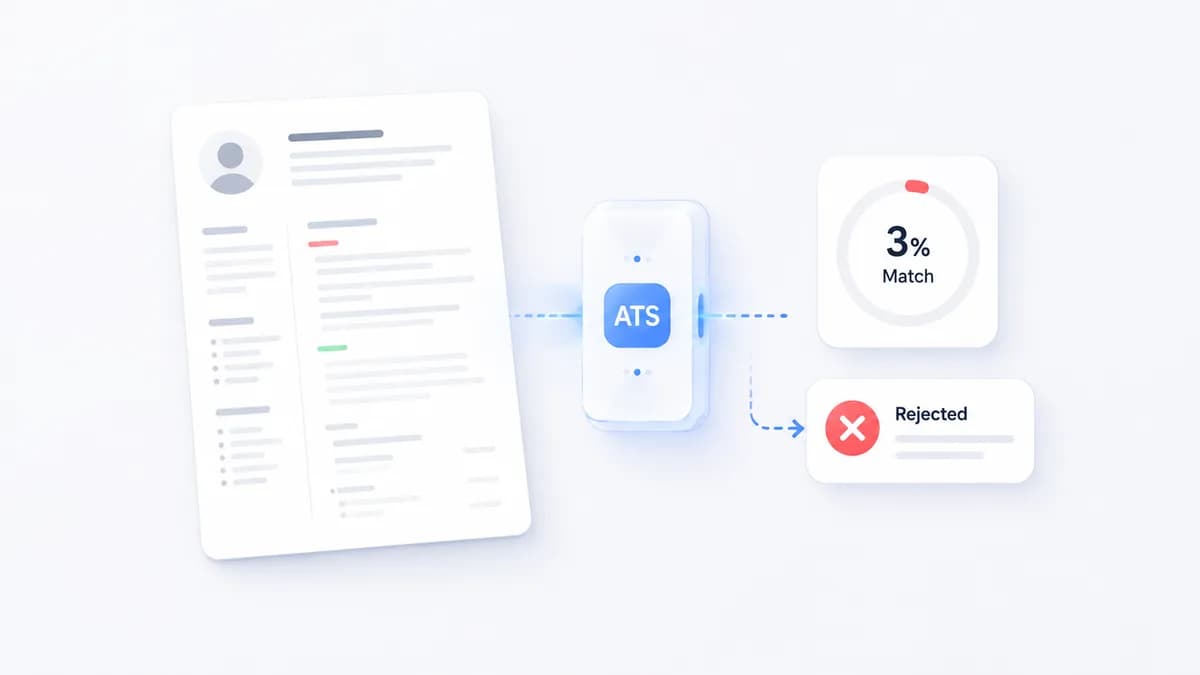
Most people do not have a resume problem because they lack experience. They have a resume problem because their experience is getting filtered, flattened, or hidden before a recruiter can understand it.
That is the frustrating part of modern job search: you can be qualified and still disappear.
Companies use software to sort applications. Recruiters skim fast. Job descriptions use specific language that may not match the words you naturally use to describe your work. A strong resume now has to do three jobs at once:
- Parse cleanly in an Applicant Tracking System (ATS)
- Match the exact language of the job posting
- Surface the most relevant experience for that role
Miss one of those, and your resume can underperform even when your background is a fit.
Here are the three resume issues we see most often, plus the fixes that help you get seen.
1. Your Resume Is Not ATS-Friendly
Your resume's first reader is often software. Before a recruiter sees your application, an ATS may parse the file, identify sections, extract dates, scan skills, and rank your match against the job posting.
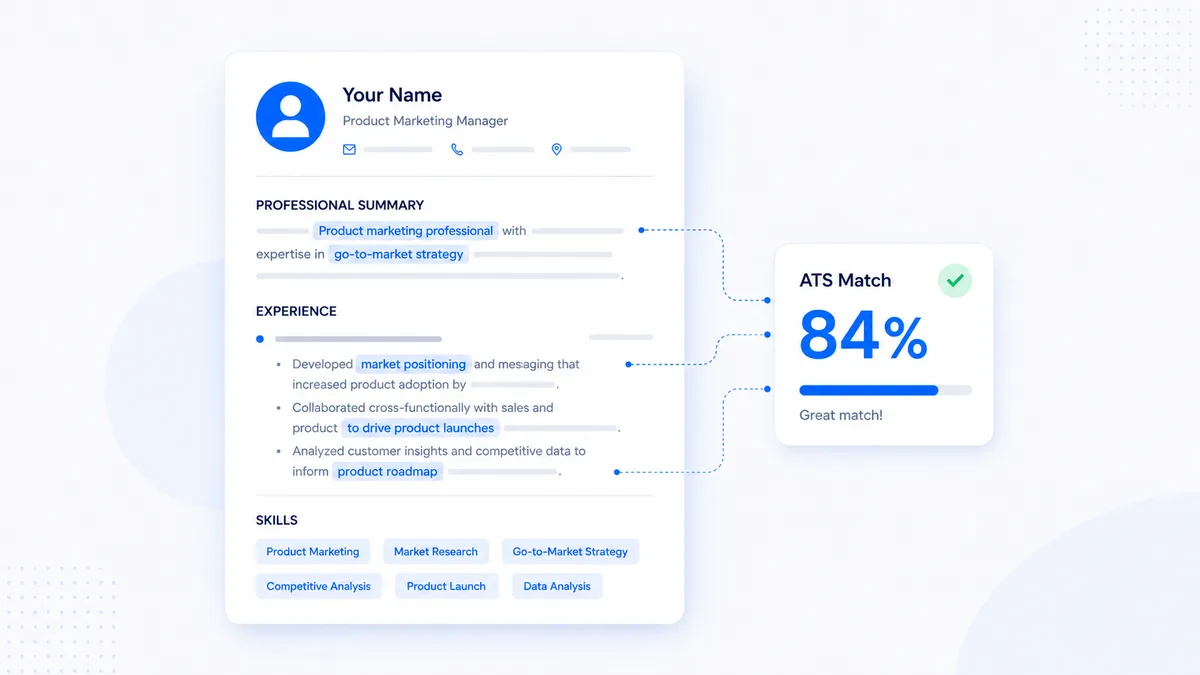
The problem is that ATS tools are not good at interpreting creative layouts. Tables, columns, text boxes, icons, headers, footers, and dense visual templates can all cause parsing mistakes.
When parsing breaks, the damage is invisible. Your resume may look polished as a PDF, but the system might read your work history out of order, skip your skills section, or miss contact details entirely.
The fix is simple, but non-negotiable:
- Use a single-column structure
- Keep section names standard: Experience, Skills, Education
- Avoid tables, graphics, and decorative text boxes
- Use clear dates, company names, and job titles
- Export a clean PDF unless the application asks for another format
TailorMe-generated resumes are built for this constraint. They stay readable to humans while preserving the simple structure software needs to parse your experience correctly.
If you want a first-glance check, copy the text out of the PDF and paste it into a plain text editor. The result does not need to look beautiful, but your name, contact details, role titles, companies, dates, bullets, and skills should still appear in a sensible order.
That is only a sanity check, though. To really understand whether software can read the resume, use a parser that tries to extract structured resume data. OpenResume's resume parser is a useful starting point because it shows how one parser interprets your file. If it misses your title, merges two jobs together, drops dates, or loses the skills section, your formatting may be getting in the way.
One parser is still only one parser. Commercial resume systems, including TailorMe, validate output across several parser behaviors in the hiring ecosystem because different tools make different mistakes. The goal is not just a PDF that looks clean to a human. The goal is a resume that stays readable when software extracts, labels, and ranks the underlying information.
2. Your Resume Uses the Wrong Words
Being qualified is not enough if your resume describes the work differently than the job posting does.
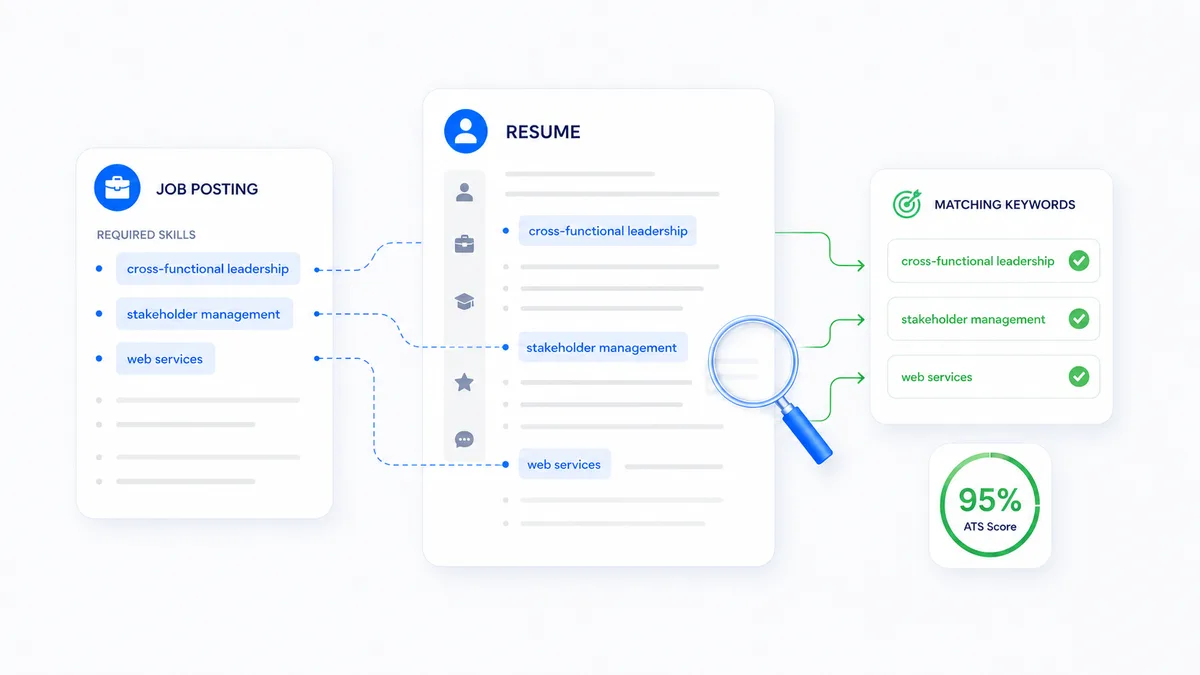
For example, your resume might say:
| You wrote | The job posting says |
|---|---|
| "Managed different teams" | "Cross-functional leadership" |
| "Worked with business partners" | "Stakeholder management" |
| "Built REST APIs" | "Web services" |
| "Cleaned data for reports" | "Data quality and analytics operations" |
These can describe the same underlying experience. But many ATS filters and recruiter searches depend on exact or near-exact phrasing. If the posting says "stakeholder management" and your resume says "worked with business partners," the match can be weaker than it should be.
The fix is not keyword stuffing. It is translation.
Read the job description closely. Pull out the skills, tools, responsibilities, and repeated phrases. Then rewrite the relevant parts of your resume using that language where it is truthful.
You are not inventing experience. You are making your real experience legible to the system evaluating it.
The safest way to do this is to pair every keyword with proof. If the job posting asks for "stakeholder management," do not just add the phrase to a skills list. Add or revise a bullet that shows the audience, the work, and the result:
| Weak keyword use | Stronger proof |
|---|---|
| "Skills: stakeholder management" | "Led weekly planning with product, sales, and legal stakeholders for launch." |
| "Experienced with data quality" | "Reduced duplicate account records by 32% by redesigning data quality checks." |
| "Cross-functional communication" | "Coordinated launch readiness across design, support, marketing, and finance." |
This keeps the resume honest and helps the recruiter see substance behind the match.
3. Your Best Experience Is Buried
Most job seekers keep one general resume and try to make it work everywhere. That creates a painful tradeoff: if you include everything, the resume feels unfocused; if you keep it short, you may cut the exact project a role cares about.
This is especially common for people who have worn multiple hats: product managers who have done analytics, marketers who have managed launches and operations, engineers who have owned customer-facing work, operators who have built internal systems.
A generic resume forces all of that into one fixed story.
The better approach is to separate your source material from the resume you submit.
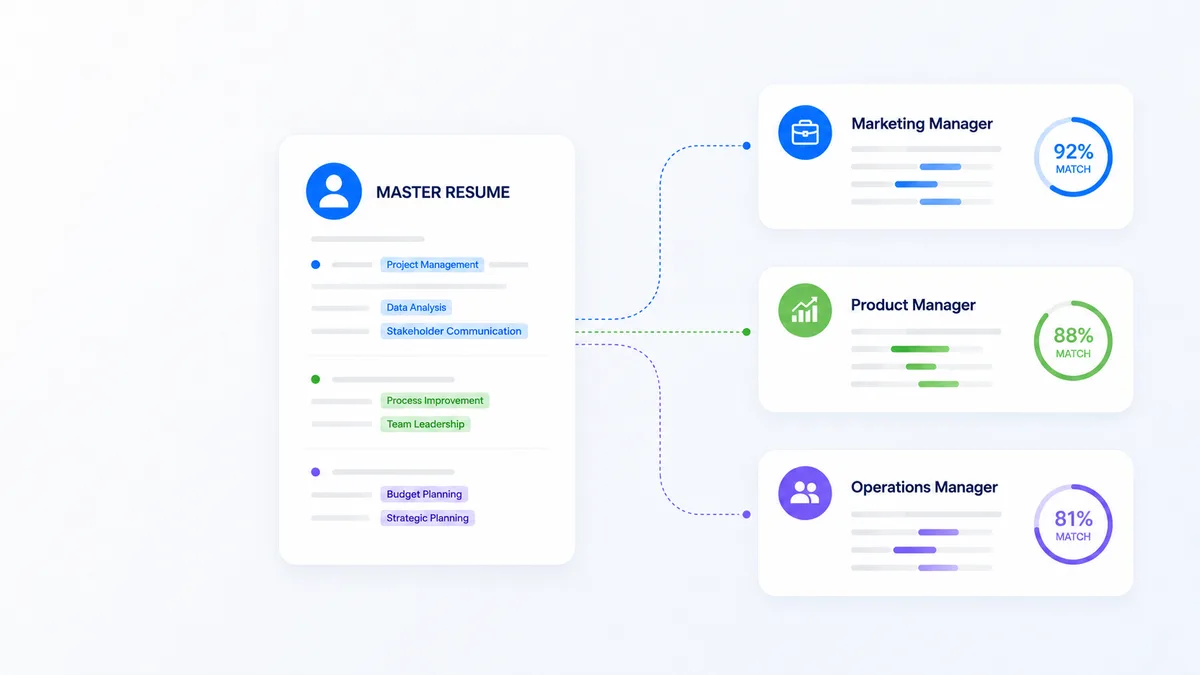
Your Master Resume should hold everything: every role, project, metric, skill, tool, certification, and achievement. It can be long. It can be messy at first. It is not the document you send to employers.
For each application, you use that Master Resume to build a focused version:
- Lead with the experience that matches the role
- Remove details that do not help this application
- Reorder bullets around the employer's priorities
- Mirror the language of the posting
- Keep the final resume concise and ATS-friendly
This is how a product-heavy resume becomes a product manager resume, a marketing resume, or an operations resume without pretending your career is smaller than it is.
The Manual Fix Does Not Scale
You can do all of this by hand. For one job, that might be manageable.
But a real job search is not one job. It is ten, twenty, or fifty applications. Proper tailoring means reading every posting, finding the language that matters, selecting the right achievements, rewriting bullets, checking formatting, and exporting a clean resume.
That is why people fall back to the same generic resume. It is not because they do not care. It is because doing the careful version every time takes too long.
The result is a loop that feels awful:
- Send a generic resume
- Get fewer replies
- Apply to more jobs
- Spend less time on each application
- Get even fewer replies
Tailoring breaks that loop.
How to Diagnose Your Resume in 15 Minutes
You can find the biggest issues before you rewrite anything. Open one job posting you would genuinely apply for, then place it beside your current resume.
First, highlight the 10 to 15 phrases that seem most important in the posting. Look for repeated terms, required tools, seniority signals, and the outcomes the team cares about. Next, search your resume for those exact or closely related phrases. If half of them are missing even though you have the experience, your resume has a language problem.
Then skim only the top third of your resume. A recruiter should understand your target role, relevant skills, and strongest proof without hunting. If the top third is generic, the resume has a positioning problem.
Finally, check whether the best evidence is attached to the most relevant role. If a job asks for analytics ownership and your best analytics project is hidden under an old role or a side project, move that proof higher in the tailored version.
This review is simple, but it changes the way you edit. Instead of polishing every sentence equally, you focus on the parts that decide whether the resume gets read.
What to Fix First
If you find several problems, fix them in order. Start with parsing, because a resume that cannot be read cleanly may never reach the point where keywords matter. Next, fix positioning in the top third of the page. The summary, first role, and skills section should make the target role obvious.
After that, work on keyword translation. Use the job posting's language where it matches your real experience, and make sure the strongest phrases are supported by bullets. Finally, trim anything that distracts from the role. A shorter tailored resume with the right proof usually beats a longer generic resume that asks the recruiter to do the matching work for you.
How TailorMe Makes Every Resume Specific
TailorMe is built around the Master Resume workflow.
You upload your complete resume once. Then, for each role, you paste the job posting or job URL. TailorMe identifies what the employer is asking for, compares it against your full career history, and creates a resume that is built for that specific opportunity.
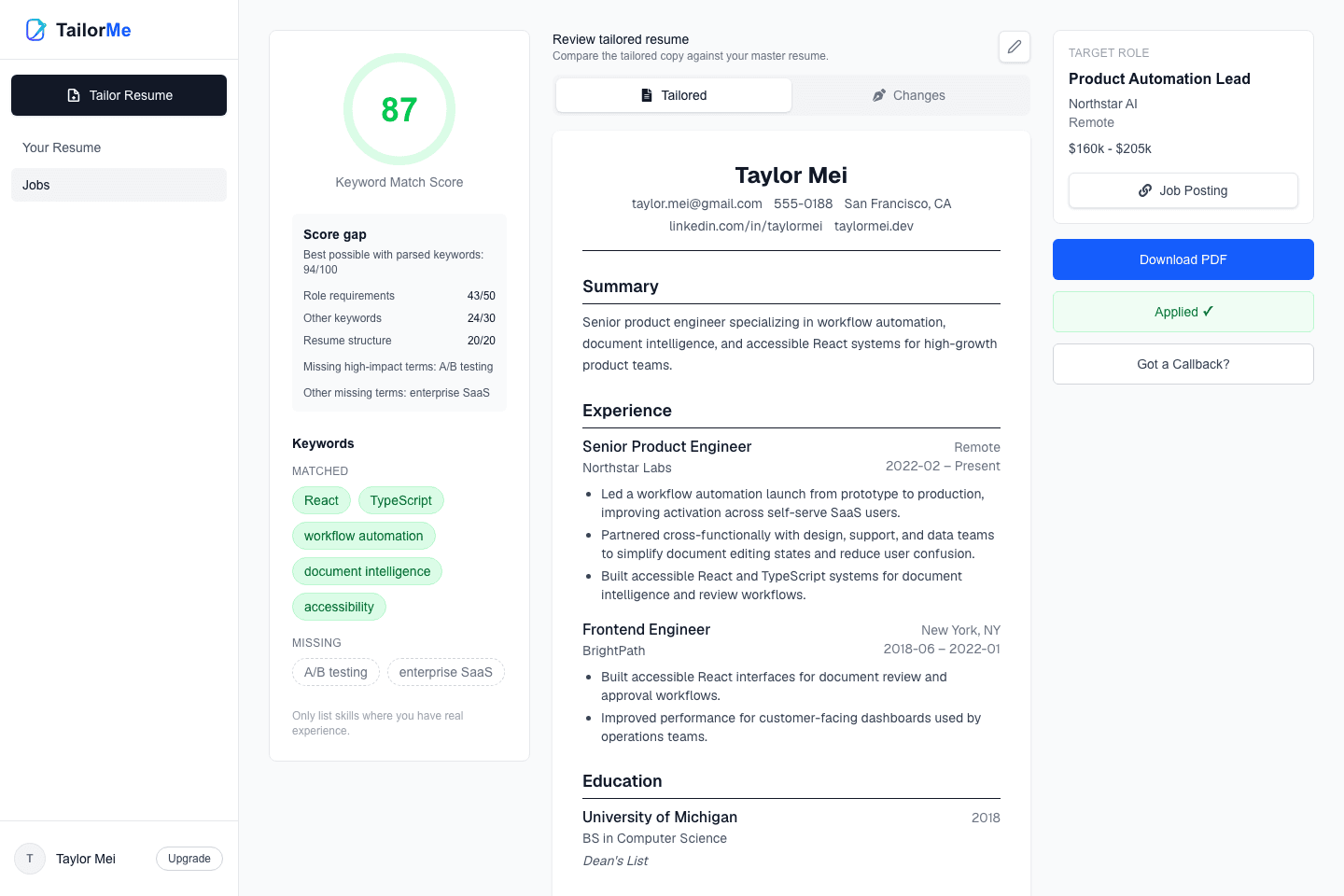
The output is designed to be:
- ATS-compatible: clean structure, standard sections, readable formatting
- Keyword-aligned: the right skills and phrases from the job posting
- Experience-focused: the most relevant achievements pulled from your full background
- Always ready: a polished resume you can submit without rebuilding from scratch
The point is not to make every candidate sound the same. It is to help your actual experience show up in the language and format hiring systems expect.
A Better Resume Starts With Better Source Material
If you only take one thing from this article, take this: stop treating your resume as a static document.
Treat it as a system.
Your Master Resume is the source of truth. Each job posting is the brief. Your submitted resume is the tailored output.
When those pieces work together, you stop guessing what to include. You stop losing strong experience to bad formatting. You stop relying on one generic document to speak to every employer.
You give each application the resume it deserves.
Ready to tailor your next application?
Upload your Master Resume, add a job posting, and get a resume built for that role in minutes.
Start tailoring for free